

If you work with air tools or manage a busy workshop, you know how frustrating tangled hoses can be. An air compressor reel hose is the simple solution that keeps your workspace neat and your tools ready to go.
Imagine never having to wrestle with a messy hose again—just pull out what you need, use it, and watch it rewind smoothly. You’ll discover how the right air compressor reel hose can save you time, reduce wear and tear, and make your projects easier than ever.
Ready to transform your work routine? Let’s dive in.
Benefits Of Air Compressor Reel Hoses
Air compressor reel hoses bring many benefits to workshops and job sites. They help keep tools ready and make work easier. Using these reels saves time and effort during daily tasks. Their design helps protect the hose and improve overall efficiency.
Improved Workspace Organization
Hose reels keep the workspace neat and tidy. They store the hose in one place, avoiding clutter. This organization frees up space for other tools and work. A clean area helps workers move safely and faster. It also makes it easier to find equipment when needed.
Enhanced Safety Measures
Loose hoses can cause trips and falls. Reel hoses reduce these risks by keeping hoses off the floor. They prevent damage to the hose that could cause leaks. Safe storage lowers the chance of accidents at work. Workers can focus more on the job and less on hazards.
Reduced Hose Wear And Tear
Proper storage stops the hose from bending or kinking. This extends the hose’s life and saves money on replacements. Reels protect hoses from dirt and sharp objects. They keep hoses dry and clean, preventing damage. Less wear means the hose works better for longer.

Credit: www.portlandcompressor.com
Types Of Air Compressor Reel Hoses
Air compressor reel hoses come in several types to suit different tasks and environments. Choosing the right type helps improve work efficiency and safety. Understanding these types makes it easier to pick the best hose reel for your needs.
Each type has unique features. These features affect how the hose is used and stored. The main categories include reel operation style, material, and size options.
Manual Vs. Automatic Reels
Manual reels require you to pull and wind the hose by hand. They are simple and cost-effective. You control how tightly the hose is stored.
Automatic reels use a spring or motor to rewind the hose. This saves time and effort. The hose is neatly stored with less chance of kinks or damage.
Material Variations
Hose reels come in different materials like steel, aluminum, and plastic. Steel reels offer high strength and durability. Aluminum reels are lightweight and resist rust.
Plastic reels are cost-friendly and resist corrosion. Choose a material based on your work environment and budget.
Size And Length Options
Air compressor hoses vary in length from 25 to 100 feet or more. Shorter hoses work well for small jobs. Longer hoses reach distant work areas without moving the compressor.
Diameter sizes affect air flow. Larger diameters allow more air volume. Match size to your compressor’s power and tool needs.
Choosing The Right Hose For Your Needs
Choosing the right air compressor reel hose is important for good work results. The hose must fit your tools and tasks perfectly. A wrong hose can cause low air flow or damage your tools. This guide helps you pick the best hose for your needs.
Matching Hose Diameter And Length
The hose diameter affects air flow. A bigger diameter means more air can pass through. Use a hose diameter that matches your air compressor and tools. Too small diameter causes low pressure and slow tool performance.
Hose length matters too. Long hoses give more reach but can lower air pressure. Choose the shortest hose that lets you work comfortably. Avoid extra-long hoses to keep good air flow.
Pressure Rating Considerations
Check the pressure rating of the hose. It must handle the maximum pressure your air compressor produces. A low pressure hose can burst or wear out fast. Always pick a hose with a higher pressure rating than your compressor.
Look for hoses marked with PSI or bar ratings. This shows the highest safe pressure. Using a hose with the right rating keeps your work safe and smooth.
Compatibility With Air Tools
Air tools need the right hose to work well. Check the tool manual for recommended hose sizes and pressure. Some tools need special hoses for best results.
Also, check the hose fittings. They must match your air tools and compressor connectors. Using the right fittings stops air leaks and tool damage.
Installation Tips For Optimal Performance
Installing an air compressor reel hose correctly helps it work better and last longer. Proper setup reduces wear and keeps air flowing smoothly. Simple steps during installation make a big difference in performance and safety.
Mounting Locations
Choose a strong wall or ceiling to mount the reel. The spot should be near your work area to avoid stretching the hose too far. Avoid places with sharp edges or heat sources. Mounting in a dry place prevents rust and damage.
Proper Hose Routing
Guide the hose so it unrolls easily without kinks or bends. Keep it away from walkways to stop tripping hazards. Avoid sharp turns that can block air flow. A smooth path helps the hose last longer and work better.
Securing Connections
Check all connections for tight fit before use. Use thread seal tape to stop air leaks at joints. Make sure fittings match the hose size exactly. Tight connections keep pressure steady and prevent air loss.
Maintenance Practices For Longevity
Maintaining an air compressor reel hose is key to making it last longer. Proper care keeps the hose safe and working well. Small efforts in maintenance prevent big problems and costly repairs.
Simple steps can protect your investment and save time. Regular attention helps avoid unexpected breakdowns. Follow these maintenance tips for the best results.
Regular Cleaning And Inspection
Clean the hose often to remove dirt and dust. Wipe the reel and hose with a dry cloth after use. Check for cracks, leaks, or worn spots. Early detection stops damage from getting worse. Inspect connections and fittings for tightness. Replace parts that show signs of wear.
Lubrication Points
Lubricate moving parts to reduce friction and wear. Use oil or grease recommended by the manufacturer. Focus on the reel’s swivel joints and bearings. Avoid over-lubricating, as it attracts dust and grime. Regular lubrication keeps the reel turning smoothly and extends its life.
Troubleshooting Common Issues
Listen for unusual noises during operation. Check for hose kinks or twists that block air flow. Tighten loose fittings to stop air leaks. Replace damaged hoses immediately to maintain safety. Keep an eye on pressure drops which may signal a problem. Quick troubleshooting prevents small issues from growing.

Credit: www.amazon.com
Maximizing Efficiency With Air Compressor Reels
Using air compressor reels helps improve work efficiency and safety. These reels keep hoses neat and ready to use. They reduce damage and save time during tasks. Organizing hoses properly leads to better air flow and less waste.
Efficient use of air compressor reels supports a smooth workflow. It cuts down on problems like tangled hoses and air leaks. This section explains how to maximize these benefits.
Minimizing Air Leaks
Air leaks waste energy and reduce pressure. Reels keep hoses tightly coiled and undamaged. This lowers the chance of cracks or holes. Regular checks on hose connections also stop leaks. Less leakage means better air pressure and less power loss.
Streamlining Hose Usage
Reels make it easy to pull out the needed hose length. This avoids dragging or stretching hoses too far. After use, hoses retract smoothly on the reel. It saves time and prevents hose tangling or twisting. Easy hose handling speeds up tasks and protects tools.
Energy-saving Techniques
Keeping hoses in good shape improves energy use. Use reels to avoid hose damage that causes air leaks. Store hoses away from heat or sharp objects. Use the shortest hose length needed for the job. These steps reduce compressor work and lower energy costs.
Durability Factors To Consider
Choosing an air compressor reel hose means thinking about how long it will last. Durability affects performance and safety. Understanding key durability factors helps pick the right hose. Focus on material, resistance, and brand trust. These elements keep the hose working well under tough conditions.
Material Strength And Flexibility
The hose material must be strong to handle pressure. It also needs flexibility for easy use and storage. Strong materials prevent cracks and leaks. Flexible hoses avoid kinks and breaks during work. Balanced strength and flexibility extend the hose’s life.
Weather And Chemical Resistance
The hose faces sun, rain, heat, and cold outside. Weather resistance stops damage from these conditions. Chemical resistance protects against oils, solvents, and other liquids. A resistant hose does not wear out fast. It keeps safe and reliable through many tasks.
Brand Reliability
Trusted brands offer tested and proven quality. They use better materials and technology. Reliable brands provide warranties and good customer support. Choosing a known brand reduces risk of failure. It ensures better durability and user confidence.
Cost Vs. Value Analysis
Choosing the right air compressor reel hose means balancing cost and value. The price tag is important, but the benefits over time matter more. Understanding this balance helps you pick a hose that fits your needs and budget.
Initial Investment
The first cost of an air compressor reel hose varies by brand and quality. Cheaper hoses may save money upfront but wear out quickly. Higher-quality hoses cost more but last longer. Spending more at the start often means better materials and design. This can prevent leaks and damage, saving money on repairs.
Long-term Savings
A good hose reduces downtime and repair costs. Durable hoses need fewer replacements. They keep air pressure steady, improving tool performance. This means less energy waste and lower utility bills. Over time, these savings can offset the higher initial price. You get more value from a hose that works well for years.
Warranty And Support
Check the warranty before buying. Longer warranties show confidence in the product’s quality. Support services can help with installation or issues. Good customer service saves time and frustration. This support adds value beyond the hose itself. It ensures your investment is protected and lasts longer.
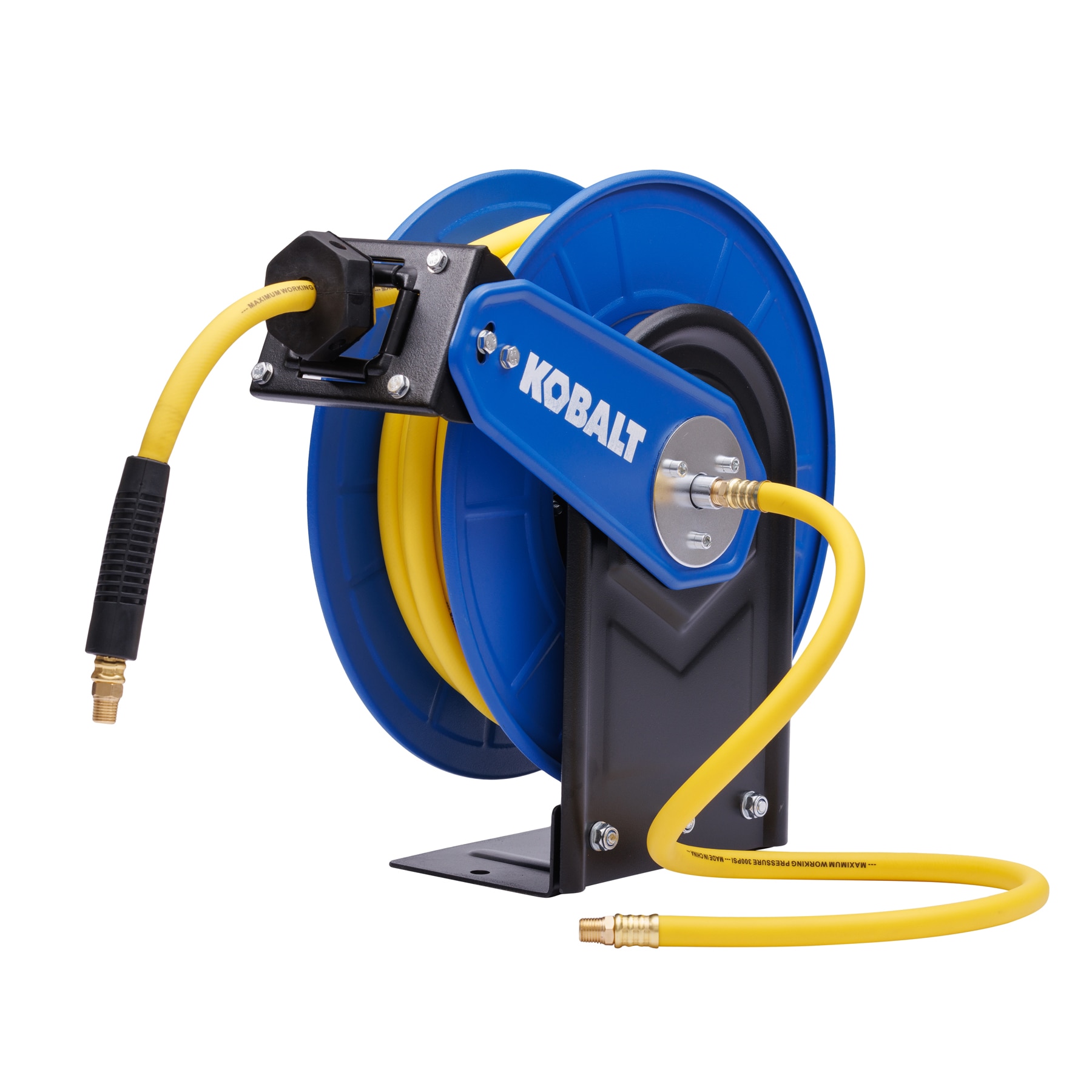
Credit: www.lowes.com
Frequently Asked Questions
What Is An Air Compressor Reel Hose?
An air compressor reel hose stores and manages air hoses neatly. It prevents tangling and damage, ensuring easy hose access and extended hose life. It’s ideal for workshops, garages, and industrial use.
How Does An Air Compressor Reel Hose Work?
The reel hose winds and unwinds the hose automatically or manually. It keeps the hose organized and ready for use. The reel often includes a swivel mechanism to maintain air flow while retracting.
What Are The Benefits Of Using An Air Compressor Reel Hose?
It improves workspace safety by reducing tripping hazards. It saves time by providing quick hose access. It protects hoses from wear and tear, increasing their lifespan and efficiency.
Can Air Compressor Reel Hoses Fit All Hose Sizes?
Most reels are designed to fit specific hose diameters and lengths. Check the reel’s specifications to ensure compatibility with your hose size for optimal performance and safety.
Conclusion
Air compressor reel hoses keep your workspace neat and safe. They save time by reducing hose tangles and damage. These reels help maintain steady air pressure for better tool performance. Choosing the right reel hose boosts efficiency and convenience. Regular care extends the hose’s life and reliability.
A good reel hose is a smart addition to any workshop or garage. Simple, practical, and helpful. Worth considering for your air compressor setup.