
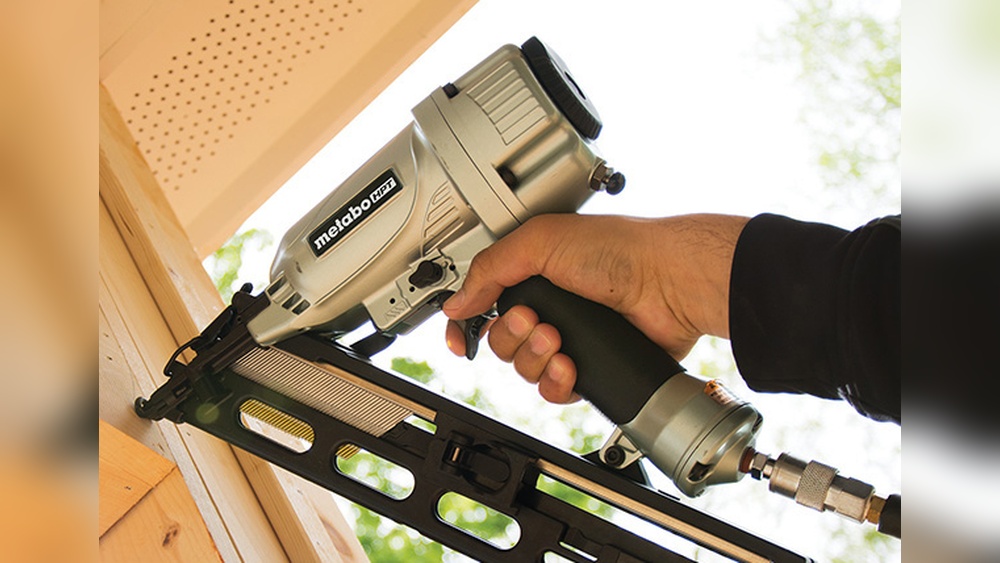
Buying an air compressor for your framing nailer is a bigger decision than many people realize. If you choose the wrong type, size, or power level, your tool may not work as expected—or worse, you could damage your nailer or compressor.
The right air compressor will help you complete framing jobs faster, with less effort and more consistent results. But what do you really need to know before you buy? This guide will give you a clear, step-by-step way to choose the best air compressor for your framing nailer, even if you’re new to air tools.
Why Your Framing Nailer Needs The Right Air Compressor
A framing nailer is a powerful tool for building walls, decks, and other large wood structures. But it can only work if it gets the right air supply. An air compressor is the machine that sends compressed air to your nailer, driving each nail with the force you need.
If your compressor is too small, it may not deliver enough air, causing your nailer to jam or fire nails weakly. If it’s too large, you could spend extra money and struggle with a heavy, noisy machine. That’s why finding the best match is so important.
How Air Compressors Work With Framing Nailers
When you pull the trigger on your framing nailer, the tool uses a burst of compressed air to push a nail into wood. The air compressor stores this air in a tank, then sends it through a hose to your nailer.
Framing nailers typically need short, powerful bursts of air, not a constant stream. This means your compressor needs to refill its tank quickly and keep up with your work pace. A slow or small compressor will slow you down, while a fast, strong compressor lets you work continuously.
Key Terms And Ratings You Need To Know
Before you choose, it’s important to understand a few technical terms. These will help you read compressor specs and compare models.
- PSI (Pounds per Square Inch): This is the pressure of the air. Most framing nailers work best with 70–120 PSI, but check your tool’s manual to be sure.
- CFM (Cubic Feet per Minute): This shows how much air the compressor can deliver each minute. Framing nailers usually need at least 2 CFM at 90 PSI.
- Tank Size (Gallons): The bigger the tank, the longer you can use the nailer before the compressor turns on to refill. For framing, 4–6 gallons is a good starting point.
- Duty Cycle: This tells you how much time the compressor can run before it needs a rest. A 50% duty cycle means it can run for 5 minutes out of every 10.
Understanding these ratings will stop you from buying a compressor that’s too weak or too powerful for your nailer.
Different Types Of Air Compressors For Framing Nailers
There are several types of air compressors, but not all are a good fit for framing work. Here’s a quick look at the main options:
Pancake Compressors
These have a small, round tank (like a pancake). They’re light and easy to carry. Good for light framing jobs, but may not keep up with heavy, all-day use.
Hot Dog Compressors
These have a horizontal, cylinder-shaped tank. They’re a bit larger than pancake types and usually quieter. They offer more air but are still portable.
Twin-stack Compressors
These have two tanks, usually stacked together. They hold more air and can run longer before refilling. Great for bigger jobs or if you work with a partner.
Wheelbarrow Compressors
These have large tanks (often 8 gallons or more) and wheels for moving around a job site. They’re heavy but ideal for big, professional framing projects.
Stationary Compressors
These are large, heavy, and stay in one place. They’re used in workshops, not on job sites. Overkill for most framing work, unless you do a lot of other air tool jobs.
Each type has its strengths and weaknesses. If you do small jobs or repairs, a pancake or hot dog compressor is fine. If you frame houses or decks often, look at twin-stack or wheelbarrow models.
Credit: www.homedepot.com
What Size Air Compressor Do You Need For A Framing Nailer?
Size matters for air compressors—but bigger isn’t always better. Here’s what most framing nailers require:
- Minimum PSI: 70–120 PSI. This is enough for almost all framing nailers.
- Minimum CFM: 2.0–2.5 CFM at 90 PSI. If you fire nails quickly, go for 3–4 CFM.
- Tank Size: 4–6 gallons for most jobs. For all-day framing, 8 gallons or more is better.
If you plan to run more than one nailer at the same time, double the CFM and consider a larger tank.
Here’s a quick comparison:
| Compressor Type | Tank Size (Gallons) | CFM at 90 PSI | Best Use |
|---|---|---|---|
| Pancake | 4–6 | 2.0–2.6 | Small framing jobs, repairs |
| Hot Dog | 6–8 | 2.5–3.0 | Medium projects, single user |
| Twin-Stack | 4–8 | 3.0–4.0 | Professional, two users |
| Wheelbarrow | 8–10+ | 4.0–5.0 | Heavy-duty, job site crew |
The goal is to match your compressor’s output with your nailer’s needs. Too little air, and you’ll see jams and weak nails. Too much, and you waste money and power.
Important Features To Look For
Not all compressors are the same, even if their ratings match. Here are key features that make a difference:
Oil-free Vs. Oil-lubricated
- Oil-free compressors are easier to maintain, lighter, and won’t leak oil on your job site.
- Oil-lubricated compressors are quieter and last longer, but need more upkeep.
For most framing work, oil-free is fine.
Noise Level
Air compressors can be very loud—sometimes over 80 decibels. If you work indoors or in a small space, look for a quiet model (under 75 dB).
Portability
If you move between rooms or job sites, weight and handle design matter. Choose a compressor with a comfortable handle and wheels if possible.
Recovery Time
This is how fast the compressor refills its tank. Faster recovery means less waiting and more nailing.
Durability
Look for a strong metal tank, solid feet, and a reliable motor. Cheap plastic parts may break after a few drops or bumps.
Other Useful Features
- Drain valve for removing water from the tank
- Multiple couplers if you want to run two nailers at once
- Easy-to-read gauges for checking pressure quickly

Credit: www.lowes.com
Matching Compressor And Nailer: A Practical Example
Let’s say you have a framing nailer that needs 90 PSI and 2. 2 CFM. You plan to build a deck, working 4–5 hours at a time.
- Choose a compressor with at least 3.0 CFM at 90 PSI. This gives you a safety margin.
- Pick a tank size of 6 gallons or more. You’ll have fewer stops to wait for the tank to refill.
- Look for a model under 80 dB if you’re working near neighbors or indoors.
If you share the compressor with a friend (two nailers), double the CFM and get a 10-gallon tank.
Common Mistakes People Make
Many buyers make simple mistakes that cost time and money. Here are some to avoid:
- Ignoring CFM: Some people only look at PSI. Always check CFM at the right pressure (usually 90 PSI).
- Buying too small: A tiny compressor may look cheap, but it can’t keep up with framing work. You’ll get jams, slowdowns, and frustration.
- Choosing the wrong type: Pancake compressors are light, but not strong enough for big projects.
- Overpaying for features you don’t need: Some compressors have extra outlets, fancy gauges, or big wheels—but if you only frame once a year, a simple model is fine.
- Not checking hose size: A thin, long hose can slow down air flow. Use a short, thick (1/4” or 3/8”) hose for best results.
- Ignoring noise level: Loud compressors can damage hearing and annoy neighbors. Check the decibel rating before you buy.
Comparing Popular Compressor Models For Framing Nailers
To make your choice easier, here’s a comparison of some popular models used for framing nailers:
| Model | Tank Size | CFM @ 90 PSI | Noise Level | Weight |
|---|---|---|---|---|
| DeWalt DWFP55126 | 6 gal | 2.6 | 75.5 dB | 30 lbs |
| Porter-Cable C2002 | 6 gal | 2.6 | 82 dB | 34 lbs |
| California Air Tools 8010 | 8 gal | 3.0 | 60 dB | 48 lbs |
| Bostitch BTFP02012 | 6 gal | 2.6 | 78.5 dB | 29 lbs |
| Makita MAC2400 | 4.2 gal | 4.2 | 79 dB | 77 lbs |
Notice how the CFM, tank size, and noise level vary. For quiet indoor use, the California Air Tools 8010 stands out. For portability, DeWalt and Bostitch are lighter.
Air Compressor Maintenance Tips
Your compressor will last longer with proper care. Here’s how to keep it working well:
- Drain the tank after each use to prevent rust. Water collects inside as air is compressed.
- Check and clean the air filter every few weeks (more often in dusty areas).
- Inspect hoses and fittings for leaks or cracks.
- For oil-lubricated models, check oil levels and change oil as the manual suggests.
- Keep it clean—dust and debris can clog parts and cause overheating.
Regular maintenance not only extends compressor life but also keeps your framing nailer working at its best.
Cost Vs. Value: How Much Should You Spend?
Air compressors for framing nailers range from $120 to $600 or more. Here’s how to think about the price:
- Under $200: Small, basic pancake or hot dog compressors. Good for occasional use.
- $200–$400: Mid-sized twin-stack or quiet hot dog compressors. Great for regular framing jobs.
- $400 and up: Large wheelbarrow or stationary compressors. Needed for heavy daily use or multiple users.
Don’t just buy the cheapest model. A reliable compressor saves time and headaches in the long run. Look for a good warranty and positive reviews from other framing carpenters.
Accessories You’ll Need For Framing With An Air Compressor
Don’t forget these extras:
- Air hose: Choose a 1/4” or 3/8” hose, 25–50 feet long. Shorter hoses provide better air flow.
- Quick-connect couplers: Make it easy to attach and remove your nailer.
- Regulator: Lets you adjust air pressure for different tools.
- Water separator: Stops water from reaching your nailer, which can cause rust or jams.
- Safety gear: Ear protection is a must with loud compressors.
These items are often sold separately, so add them to your budget.
Safety Tips For Using Air Compressors With Framing Nailers
Powerful tools can be dangerous if used carelessly. Follow these safety tips:
- Wear eye and hearing protection every time you use your framing nailer.
- Check hoses and connections before you start—never use damaged parts.
- Release pressure from the compressor and nailer before making repairs or changing hoses.
- Never point the nailer at yourself or others.
- Keep the compressor on a flat, stable surface to prevent tipping.
A few extra seconds of care can prevent serious injuries.
Advanced Considerations: Using Multiple Nailers Or Other Air Tools
If you plan to use more than one framing nailer, or run other tools like impact wrenches, multiply your CFM needs. For example, two nailers that each need 2. 5 CFM at 90 PSI require a compressor with at least 5.
0 CFM at 90 PSI.
For workshops, a stationary compressor with a large tank (20 gallons or more) and high CFM is best. This also lets you add spray guns, sanders, or other air tools later.
Environmental And Power Considerations
Most job site compressors are electric and run on standard 120V outlets. For remote locations, a gas-powered compressor may be needed, but these are heavier and noisier.
If you work in cold weather, check that your compressor starts easily below 32°F (0°C). Some oil-lubricated models can thicken and fail in the cold.
Air Compressor Buying Checklist
Before you buy, run through this checklist:
- What is your nailer’s required CFM and PSI?
- What size jobs will you do—small repairs or full-house framing?
- Do you need to move the compressor often?
- Is noise a problem for your work area?
- How many nailers will you run at once?
- Is your budget realistic for your needs?
- Will you use other air tools with this compressor?
Answering these questions will guide you toward the right choice.
Real-world User Tips And Insights
Here are some things experienced framers wish they knew earlier:
- Plan for extra tools: If you might add a finish nailer, stapler, or air ratchet later, get a slightly larger compressor now.
- Try before you buy: If possible, test the compressor at a store. Some are much louder or heavier than you might expect.
- Buy quality hose: A stiff, cheap hose can make your framing nailer hard to use, especially in cold weather.
- Store your compressor inside: Cold, damp garages can shorten compressor life. Keep it in a dry place when not in use.
- Watch for voltage: Some large compressors need 240V outlets, which most homes don’t have.
When To Upgrade Your Air Compressor
You may need a new compressor if:
- Your current compressor can’t keep up with your work speed.
- You start getting frequent jams or weak nails.
- You want to run more than one tool at once.
- Your old compressor is loud, heavy, or hard to move.
Upgrading to a better compressor can make framing jobs faster, smoother, and more enjoyable.
Credit: www.senco.com
Quick Reference: Minimum Compressor Specs For Framing Nailers
To keep things simple, here’s a quick reference table for minimum specs:
| Number of Nailer(s) | Tank Size (Gallons) | CFM at 90 PSI | Recommended Compressor Type |
|---|---|---|---|
| 1 | 4–6 | 2.0–2.5 | Pancake or Hot Dog |
| 2 | 8–10 | 4.0–5.0 | Twin-Stack or Wheelbarrow |
| 3 or more | 20+ | 6.0+ | Stationary |
Always check your nailer’s manual for the exact CFM/PSI needed.
Frequently Asked Questions
What Size Air Compressor Do I Need For A Framing Nailer?
Most framing nailers work well with a compressor that delivers 2.0–2.5 CFM at 90 PSI and has a 4–6 gallon tank. For faster work or more than one nailer, choose at least 3–4 CFM and a larger tank.
Can I Use A Pancake Air Compressor For Framing?
Yes, a pancake compressor can handle small framing jobs if it meets the CFM and PSI requirements. For big projects, a larger twin-stack or wheelbarrow compressor is better.
How Loud Are Air Compressors For Framing Nailers?
Many compressors run at 75–85 decibels—about as loud as a vacuum cleaner. Some quiet models are below 70 dB. Always wear hearing protection when working for long periods.
Do I Need An Oil-free Or Oil-lubricated Compressor?
Oil-free compressors are easier to maintain and are fine for most framing jobs. Oil-lubricated compressors last longer and run quieter but need regular oil checks.
Where Can I Learn More About Air Compressor Safety And Maintenance?
A reliable resource for more information is the OSHA Compressed Air Safety eTool, which covers safety, maintenance, and best practices.
Choosing the right air compressor for your framing nailer doesn’t have to be confusing. Take your time, match the specs, and invest in a model that fits your real needs. With the right setup, your framing projects will be faster, easier, and far more enjoyable.