
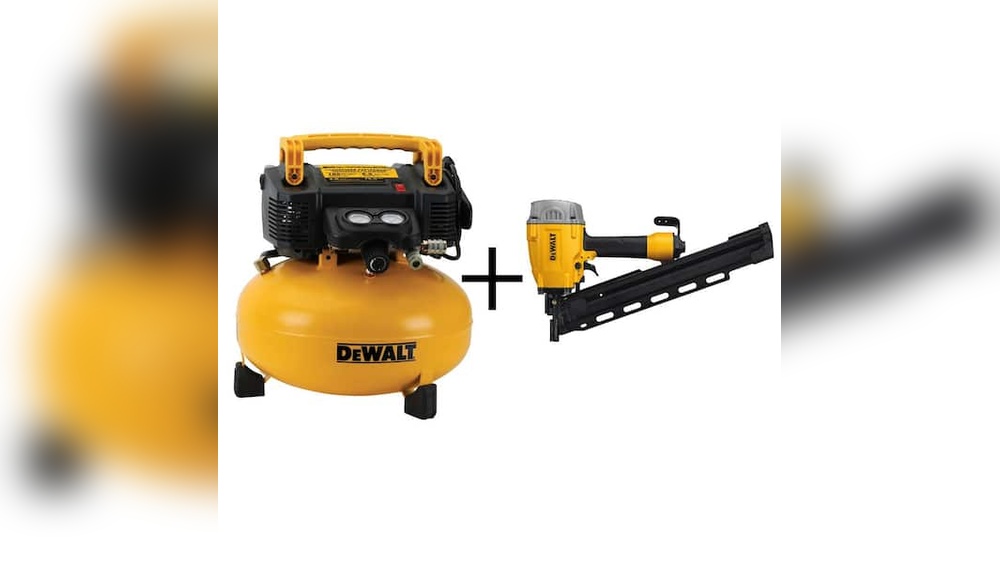
When you’re building a house, a deck, or just framing walls, the right tools make a big difference. One of the most important combos in construction is a framing nailer with an air compressor. But not every air compressor works well with every framing nailer. Choosing the wrong compressor can slow you down, damage your nailer, or even stop your project. This guide compares air compressors for framing nailers, explains what really matters, and helps you find the best fit for your needs—whether you’re a contractor, a DIYer, or just getting started.
Why The Right Air Compressor Matters For Framing Nailers
Framing nailers need bursts of high pressure to drive big nails into tough wood. Not all air compressors can keep up with that demand. If your compressor is too small or weak, you’ll waste time waiting for it to recharge.
Worse, it could overheat or break. Picking the right air compressor means you can work faster, safer, and with fewer problems.
Many beginners think any air compressor will do. But framing nailers need more air power (CFM) and consistent pressure (PSI) than smaller tools like brad nailers or staplers. Using a compressor that’s too small is a common mistake. It’s also easy to overpay for features you don’t need.
This article will help you avoid those traps.
Another hidden issue is air quality. Compressors that produce excess moisture or oil can cause nailers to jam or corrode. For framing, you need clean, dry air—something better compressors provide. Also, mismatched hoses or fittings can lead to leaks, reducing pressure and slowing nailer performance.
Paying attention to these small details boosts reliability and cuts down on frustrating delays.
Key Factors: What To Look For When Comparing Air Compressors
Buying an air compressor for a framing nailer isn’t just about price or size. Here are the most important factors you should consider:
1. Air Delivery: Cfm (cubic Feet Per Minute)
The CFM rating shows how much air the compressor can deliver per minute. Framing nailers usually need about 2.0 to 2.5 CFM at 90 PSI for smooth operation. Some larger, coil-style nailers or high-speed work may need even more.
If you work in bursts, the compressor’s CFM matters even more. For example, rapid-fire nailing for flooring or roof trusses can push a compressor past its limit. Also, CFM drops as temperature changes—cold weather can reduce air output. Always check actual performance, not just listed specs.
2. Pressure: Psi (pounds Per Square Inch)
PSI is how much force the compressor can provide. Most framing nailers need 90 to 120 PSI. Make sure your compressor can handle at least 120 PSI to give a safety margin.
A non-obvious tip: Some compressors reach high PSI but struggle to maintain it during continuous use. Look for compressors that can sustain pressure, not just peak briefly. This keeps nailers firing consistently and prevents jams.
3. Tank Size
A bigger tank (measured in gallons) means the compressor can store more air, so it runs less often. For framing, 4 to 6 gallons is the minimum, but 6 to 8 gallons or more is better for longer jobs. If you’re using two nailers at once, go even bigger.
Remember, tank size affects compressor cycling. Frequent cycling wears out motors faster and makes more noise. For projects with steady nailing, a larger tank saves time and extends compressor life.
4. Duty Cycle
The duty cycle tells you how long a compressor can run before needing to cool down. For framing, look for a compressor with at least a 50% duty cycle. Higher is better if you do a lot of nailing in a short time.
Some compressors have thermal overload protection, shutting down automatically if they get too hot. This feature is useful for heavy framing, but you should plan breaks if your compressor runs at its limit. Understanding duty cycle helps prevent downtime and avoids damage.
5. Portability
If you move from site to site, weight and handle design matter. Pancake and hotdog compressors are easier to carry. Large horizontal compressors are heavier but can power more tools.
Portability isn’t just about weight. Look for compressors with sturdy handles, wheels, and compact shapes. Some models have roll cages, protecting them from falls. If you often work in tight spaces or need to carry your compressor upstairs, these features are essential.
6. Noise Level
Framing is noisy work, but quieter compressors (under 80 dB) make a big difference if you work indoors or in noise-sensitive areas.
Noise can also affect productivity. Loud compressors can drown out communication and cause fatigue over long shifts. If you work in finished homes, schools, or hospitals, choose compressors that list low decibel ratings.
7. Power Source
Most compressors are electric (plug into standard outlets). Gas-powered models are for remote sites without power but are heavier and noisier.
Electric compressors are easier for indoor work, but check your circuit rating. Some need 20-amp outlets, not standard 15-amp. For outdoor framing, gas models are reliable but require regular fuel and maintenance.
8. Build Quality And Maintenance
Oil-free compressors need less maintenance but may not last as long as oil-lubed models. Contractors often prefer oil-lubed compressors for durability.
Check for features like cast-iron cylinders, metal guards, and simple maintenance access. Sturdy build quality pays off if your compressor travels between sites or faces rough handling.
9. Price And Warranty
More expensive doesn’t always mean better. Compare warranties and what’s included (hoses, fittings, etc.).
Warranties vary from 1 to 5 years. Sometimes, premium brands offer better support or replacement parts. Also, check if the compressor comes with accessories like hoses, quick-connects, or air filters—these can add value and save money.

Credit: www.youtube.com
Popular Air Compressor Types For Framing Nailers
Not all air compressors are built the same. Here are the main types you’ll see:
- Pancake Compressors: Small, round, lightweight. Good for one nailer, short jobs.
- Hotdog Compressors: Horizontal, single cylinder. Slightly bigger, still portable.
- Twin-stack Compressors: Two tanks for more air, still portable.
- Wheelbarrow Compressors: Large, gas-powered, for big job sites.
- Stationary Compressors: Very large, for workshops.
Each type has pros and cons. Let’s compare them in a simple chart:
| Type | Tank Size | CFM @ 90 PSI | Best Use |
|---|---|---|---|
| Pancake | 3-6 gal | 2.0-2.6 | Light framing, single nailer |
| Hotdog | 4-8 gal | 2.0-3.2 | Small teams, repair work |
| Twin-stack | 4-8 gal | 3.0-4.0 | Two nailers, medium jobs |
| Wheelbarrow | 8+ gal | 5.0+ | Large crews, remote sites |
| Stationary | 20+ gal | 6.0+ | Workshops, multiple tools |
Some types, like twin-stack and wheelbarrow compressors, are often overlooked by beginners. Twin-stack models are ideal for two-person teams, giving extra air without sacrificing portability. Wheelbarrow compressors, with their big tanks and gas engines, are perfect for remote work where power isn’t available.
Side-by-side: Top Air Compressors For Framing Nailers
Let’s compare some of the most popular models. All these are widely used in framing, and each has pros and cons.
| Model | Type | Tank Size | CFM @ 90 PSI | Weight | Noise (dB) | Price Range |
|---|---|---|---|---|---|---|
| DEWALT DWFP55126 | Pancake | 6 gal | 2.6 | 30 lbs | 75.5 | $$ |
| Makita MAC2400 | Hotdog | 4.2 gal | 4.2 | 77 lbs | 79 | $$$ |
| Bostitch BTFP02012 | Pancake | 6 gal | 2.6 | 29 lbs | 78.5 | $$ |
| California Air Tools 8010 | Hotdog | 8 gal | 3.0 | 48 lbs | 60 | $$$ |
| PORTER-CABLE C2002 | Pancake | 6 gal | 2.6 | 34 lbs | 82 | $$ |
| Rolair FC2002 | Twin-stack | 4.3 gal | 4.1 | 62 lbs | 79 | $$$ |
Notable Insights From The Comparison
- DEWALT DWFP55126 and Bostitch BTFP02012 are lightweight, affordable, and fine for solo DIY jobs or small crews. Both struggle with high-speed, two-nailer use.
- Makita MAC2400 and Rolair FC2002 are heavier but deliver more CFM. They can keep up with two framing nailers for most jobs.
- California Air Tools 8010 stands out for its quiet operation—much easier on your ears if you work indoors or in noise-sensitive neighborhoods.
- PORTER-CABLE C2002 is a budget pick. Good for small tasks, but the noise is higher and it’s not as durable for everyday pro use.
Another detail: California Air Tools 8010, with its lower noise, is oil-free but still lasts well for indoor jobs. It’s often chosen for renovations in occupied spaces. The Makita MAC2400, meanwhile, is oil-lubed and famous for reliability; it’s the kind of compressor contractors use for full-house framing. Rolair FC2002, with twin tanks, can handle bursts of nailing, making it ideal for rooms with lots of studs.
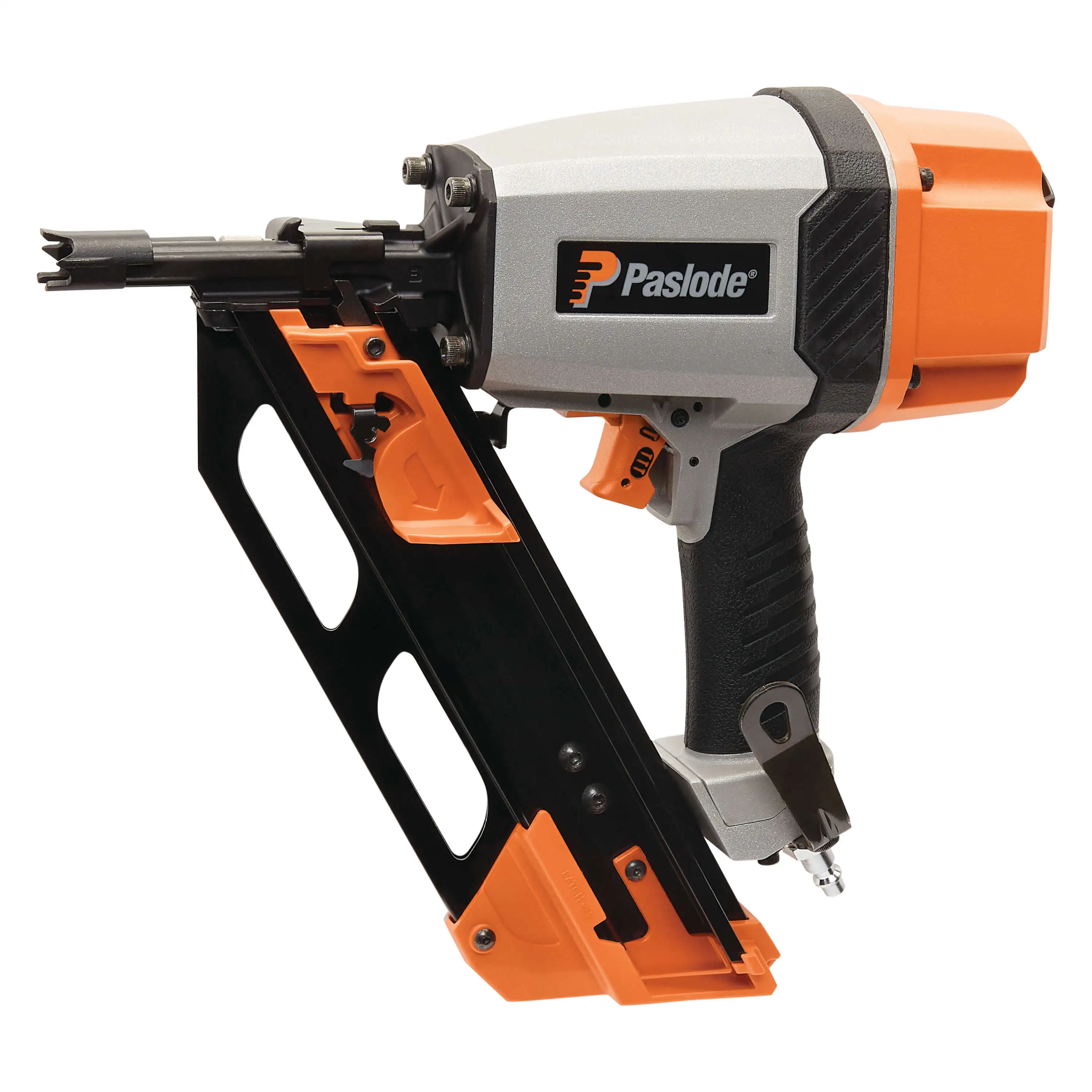
Credit: www.paslode.com
How To Match An Air Compressor To Your Framing Nailer
It’s not just about picking a popular model—you need to match the compressor to your nailer’s needs and your working style.
Step 1: Check Your Framing Nailer’s Specs
Find the CFM and PSI requirements for your nailer. Most framing nailers need at least 2.0 CFM at 90 PSI. High-end coil nailers or heavy-duty models may want more.
Some nailers list “minimum operating pressure” and “recommended CFM. ” Always go by the higher number if both are listed. If your nailer has a high firing rate or is used for engineered lumber, plan for extra CFM.
Step 2: Estimate Your Air Demand
- One nailer, moderate speed: 2.0–2.5 CFM at 90 PSI is enough.
- Two nailers, fast pace: 4.0+ CFM at 90 PSI is safer.
- Large crews, heavy use: Go as high as 5.0–6.0 CFM.
It’s wise to buy a compressor with 20-30% more CFM than your max expected load.
If you ever plan to add another nailer, invest in a larger compressor now. This prevents future upgrades and saves money in the long run.
Step 3: Consider Your Job Type
- Short jobs (repair, punch-list): Pancake or small hotdog is fine.
- Framing whole houses or additions: Twin-stack or larger is better.
- Remote sites: Gas-powered, wheelbarrow style.
For jobs with lots of moving, like remodeling, portability is key. For stationary framing, durability and tank size matter more.
Step 4: Don’t Forget Power Supply
- Standard 110V outlets support most small/medium compressors.
- 240V or gas needed for very large, workshop units.
Some compressors require dedicated circuits. Check your site’s power before purchase.
Step 5: Think About Portability And Storage
- If you work alone or move often, lighter is better.
- If you have a truck and team, a heavier compressor might not matter.
Consider storage space, too. Pancake compressors fit in car trunks. Stationary models need dedicated floor space.
Real-world Scenarios: Choosing The Right Compressor
Let’s look at some common situations:
Scenario 1: Single Diy Framer
You’re building a shed or framing a basement wall. You use your nailer for a few hours at a time, alone.
- Best fit: Pancake compressor (DEWALT DWFP55126 or Bostitch BTFP02012)
- Why: Light, easy to carry, enough air for one nailer
A bonus: Pancake compressors often plug into any household outlet, making them ideal for home projects. Their small footprint is easy to store, and most models come with basic accessories.
Scenario 2: Two-person Crew
You and a partner are framing walls, sometimes firing at the same time.
- Best fit: Twin-stack or larger hotdog (Makita MAC2400, Rolair FC2002)
- Why: More CFM, can keep up with two nailers
These compressors handle continuous nailing and let you work without frequent pauses. Many twin-stack models have dual outlets for two hoses.
Scenario 3: Remote Job Site
There’s no electricity. You need to power two or three nailers all day.
- Best fit: Wheelbarrow, gas-powered compressor (Rolair GD4000PV5, not in the chart above but well known)
- Why: Big tank, high CFM, works anywhere
Gas compressors can run for hours if you bring enough fuel. They’re rugged and built for rough terrain, but remember to check local noise regulations.
Scenario 4: Indoor, Noise-sensitive Work
You’re framing in a home or school where noise bothers people.
- Best fit: Ultra-quiet compressor (California Air Tools 8010)
- Why: Only 60 dB, much quieter than others
Quiet compressors make a noticeable difference for both workers and residents. They also reduce hearing fatigue, helping you work longer without discomfort.
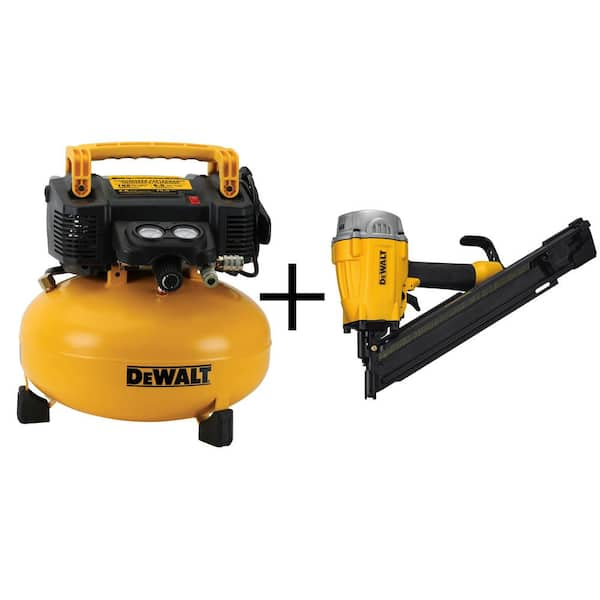
Credit: www.homedepot.com
Air Compressor Features That Actually Matter For Framing
Many compressors offer fancy features, but not all are worth your money. Here’s what really makes a difference:
Oil-free Vs. Oil-lubed
- Oil-free: Less maintenance, lighter, but may wear out faster with heavy use.
- Oil-lubed: Last longer, quieter, but need regular oil changes and are heavier.
If you work daily or share equipment, oil-lubed compressors are a solid investment. For occasional use, oil-free is simpler.
Fast Recovery Time
A fast recovery means the compressor refills its tank quickly after each burst of use. This is key for framing, where you often fire nails in quick bursts.
Look for compressors with high pump efficiency and thermal protection. Some models advertise “quick recovery”—check actual refill times in reviews.
Easy Drain Valve
Moisture builds up in the tank. A convenient drain valve (ideally ball valve style) lets you empty it quickly, preventing rust.
Drain valves placed at the bottom are better, as they allow full drainage. Avoid compressors with awkward valve placement—it can make daily maintenance harder.
Good Gauges And Controls
Big, clear gauges make it easy to check pressure and adjust output. Cheap compressors often have tiny, hard-to-read dials.
Some models have dual gauges for tank and regulator pressure. This helps you fine-tune air output for different tools.
Roll Cage Or Protective Frame
Keeps the compressor safe if it tips over on a busy job site.
Steel roll cages also help protect hoses and fittings. If you work in crowded spaces, this feature is worth considering.
Long Power Cord And Hose
A longer cord and hose give you more flexibility, especially in large rooms or when outlets are far away.
Using a short hose can limit mobility, while a longer hose lets you position the compressor out of the way. Choose hoses rated for high PSI and avoid cheap, thin ones.
Common Mistakes To Avoid
Even experienced builders make air compressor mistakes. Here are some traps to watch out for:
- Underestimating CFM Needs: Many users buy compressors with just enough CFM for one nailer, then add a second nailer and run out of air.
- Ignoring Duty Cycle: Running a small compressor nonstop can cause overheating and shorten its life.
- Choosing Too Small a Tank: Small tanks mean frequent cycling, which is annoying and hard on the compressor.
- Overpaying for Power: Don’t buy a huge, heavy compressor if you only frame once a month.
- Neglecting Maintenance: Forgetting to drain the tank or change oil leads to rust and breakdowns.
- Not Checking Outlet Power: A 15-amp circuit may not handle a big compressor, causing tripped breakers.
Other pitfalls include using the wrong hose diameter (which can reduce air flow), and failing to check air quality (moisture or oil contamination). If you notice nails misfiring, check hose connections and compressor output before blaming the nailer.
Practical Tips For Getting The Most From Your Compressor
- Let the compressor build full pressure before starting. This prevents stalls and reduces wear.
- Use a good-quality hose (3/8” or 1/4”). Wider hoses lose less pressure, especially over long runs.
- Keep extension cords short and heavy-duty. Long, thin cords cause voltage drops and can burn out motors.
- Drain your tank daily. Moisture causes rust and shortens compressor life.
- Check filters and oil (if oil-lubed) every week.
- Store indoors if possible. Extreme cold or damp can damage seals and hoses.
Also, keep spare fittings and hose clamps handy. If you work in cold weather, let the compressor warm up before heavy use. Lubricate moving parts according to the manual, and always use the correct oil for oil-lubed models.
Real User Stories And Insights
Sometimes, real-world experience is more helpful than specs. Here are two stories from framing crews:
- Story 1: A small crew bought a pancake compressor for framing a garage. It worked fine at first, but as they sped up, the compressor couldn’t keep up. Nails misfired, and the tool jammed. Upgrading to a twin-stack solved the problem.
- Story 2: A contractor used a super-quiet California Air Tools compressor in a school renovation. The crew could frame during class hours with almost no complaints about noise—a huge plus for indoor work.
Non-obvious insight: Sometimes the best compressor isn’t the one with the highest specs, but the one that fits your actual job setting and team size. Also, quieter models can reduce fatigue over long days, something many builders don’t consider until they try one.
Another lesson: Investing in a compressor with fast recovery and dual outlets helped one crew finish a job two days early. They avoided downtime and didn’t need to rent extra equipment.
Frequently Asked Questions
What Size Air Compressor Do I Need For A Framing Nailer?
For most framing nailers, you need at least 2.0 to 2.5 CFM at 90 PSI. If you plan to use two nailers or work fast, choose a compressor with 4.0 CFM or more and a tank size of at least 6 gallons.
A good rule: If your nailer jams or misfires during rapid use, your compressor is probably too small.
Can I Use A Small Pancake Compressor For Framing?
Yes, but only for light-duty or DIY jobs. Pancake compressors with 6-gallon tanks and around 2.6 CFM can handle one framing nailer at a moderate pace. For larger jobs or two nailers, you’ll need a bigger unit.
For short bursts or small repairs, pancakes are fine. For continuous nailing, you’ll notice performance drops.
What’s Better: Oil-free Or Oil-lubed Compressor For Framing?
Oil-free compressors are easier to maintain and lighter, which is good for occasional use or DIYers. Oil-lubed compressors last longer and handle heavy, daily use better, making them popular with contractors.
If you need quiet operation and minimal maintenance, oil-free is a good pick. For heavy, all-day framing, oil-lubed will save money over time.
How Loud Are Air Compressors For Framing Nailers?
Most compressors are 75–85 dB, which is as loud as a vacuum cleaner. Some quiet models are around 60 dB. If you work indoors or near people, a quieter compressor is worth the investment.
Noise is often underestimated—try to test compressors before buying, if possible.
Can I Run Other Tools With My Framing Nailer Compressor?
Yes, if your compressor has enough CFM and PSI for both tools. For example, running a framing nailer and a small air ratchet is possible with a twin-stack or larger compressor. Always check the combined air demand before using multiple tools.
For multiple tools, add up their CFM needs and check that your compressor can handle the load.
If you want to read more about the science behind air compressor ratings and how they’re tested, check the official OSHA Compressed Air Tools Guide.
Getting the right air compressor for your framing nailer is not just about specs—it’s about matching the tool to your work style, crew size, and job type. With the right compressor, your framing projects will go smoother, faster, and with fewer headaches.
Before buying, weigh your real needs, check your nailer’s specs, and think about how often and where you’ll use it. That way, you’ll get the best value—and a tool that lasts for years.