
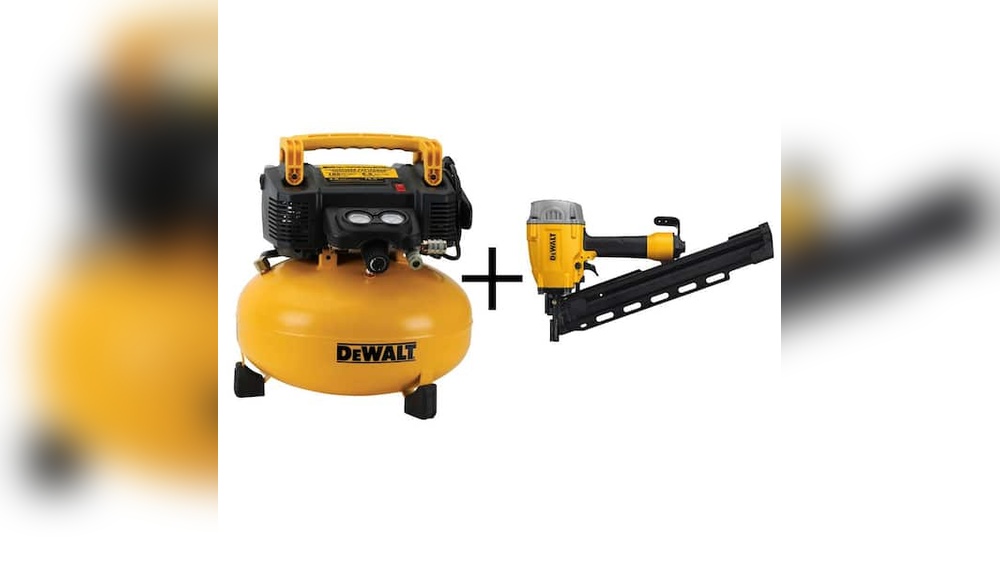
An air compressor is a must-have for anyone using a framing nailer—whether you’re a professional carpenter or tackling home renovation. But not all air compressors work equally well with framing nailers. If you choose the wrong one, you could face weak nail drives, tool jams, or even damage your equipment. That’s why it’s important to understand which features matter most, how different models compare, and what you should look for before buying. This guide will help you compare air compressors for framing nailers in detail, making it easier to pick the right tool for your needs and budget.
Why Air Compressors Matter For Framing Nailers
Framing nailers need a steady supply of compressed air to drive nails into wood, framing, and other tough materials. The air compressor acts like the heart of your pneumatic system. If it’s underpowered or too slow, your nailer may misfire or stall.
Too big, and you might waste money, space, and energy.
When using a framing nailer, you want to avoid:
- Underpowered compressors: These can’t keep up with fast nailing or multiple users.
- Oversized compressors: They’re often louder, heavier, and more expensive than needed.
- Wrong tank type: Impacts portability and air delivery.
Two non-obvious insights: Many beginners don’t realize that recovery time (how quickly the compressor refills its tank) can slow their work, especially during longer projects. Also, the difference between continuous vs. intermittent use is key—some compressors work fine for short bursts but struggle with constant nailing.
Key Factors To Compare When Choosing An Air Compressor For Framing Nailers
Before comparing specific models, it’s important to know what really matters. Not all features are equally important for framing nailers.
1. Psi (pounds Per Square Inch)
PSI measures air pressure. Most framing nailers need about 70–120 PSI. The compressor must deliver at least as much as your nailer requires. Too low, and nails won’t drive fully. Too high, and you risk damaging the tool.
2. Cfm (cubic Feet Per Minute)
CFM is the volume of air delivered per minute. This is often more important than PSI. A framing nailer usually needs 2–4 CFM at 90 PSI. If your compressor can’t keep up, it has to stop and refill, causing delays.
3. Tank Size
Tank size affects how long you can run your nailer before the compressor needs to refill.
- Small tanks (1–3 gallons): Lightweight and portable, but not for long jobs.
- Medium tanks (4–6 gallons): Good balance for most users.
- Large tanks (8+ gallons): Handle heavy-duty, continuous work, but are heavy.
4. Portability
If you move between job sites or work in tight spaces, weight and size matter. Pancake and hotdog compressors are more portable, while wheelbarrow models are better for heavy use.
5. Noise Level
Air compressors can be loud. Quieter models (below 75 dB) are better for indoor or residential use.
6. Duty Cycle
This is how long the compressor can run before it needs a break. For framing nailers, a 50% duty cycle is usually enough. Continuous use (100%) is rare unless for commercial framing.
7. Power Source
Most compressors are electric, but gas-powered options exist for outdoor or remote work.
8. Price And Warranty
Higher price often brings more durability and features. Warranties show manufacturer confidence.
Comparing Common Types Of Air Compressors For Framing Nailers
There are several types of compressors used with framing nailers. Here’s a side-by-side look at the most popular categories:
| Type | Best For | Typical Tank Size | Pros | Cons |
|---|---|---|---|---|
| Pancake | Homeowners, portability | 4–6 gallons | Compact, easy to carry | Limited power, noisy |
| Hotdog | DIY, small jobs | 2–8 gallons | Stable, fits in cars | Can roll, less air than twin-stack |
| Twin-stack | Pros, longer use | 4–8 gallons | More air, still portable | Heavier, pricier |
| Wheelbarrow | Heavy-duty, multiple tools | 8–20+ gallons | High capacity, outdoor use | Bulky, expensive |
Top 8 Air Compressors For Framing Nailers: Detailed Comparison
Let’s compare eight of the best air compressors for framing nailers. These models are chosen for their balance of power, portability, value, and reliability.
| Model | CFM @ 90 PSI | Tank Size | Weight | Noise (dB) | Price Range |
|---|---|---|---|---|---|
| PORTER-CABLE C2002 | 2.6 | 6 gal | 30 lbs | 82 | Low |
| BOSTITCH BTFP02012 | 2.6 | 6 gal | 29 lbs | 78.5 | Low |
| DEWALT DWFP55126 | 2.6 | 6 gal | 32 lbs | 75.5 | Mid |
| Makita MAC2400 | 4.2 | 4.2 gal | 77 lbs | 79 | High |
| California Air Tools 8010 | 3.0 | 8 gal | 48 lbs | 60 | Mid |
| Rolair JC10 Plus | 2.35 | 2.5 gal | 42.9 lbs | 60 | High |
| Metabo HPT EC710S | 1.3 | 6 gal | 36.5 lbs | 73 | Low |
| Senco PC1010 | 0.7 | 1 gal | 20 lbs | 68 | Low |
Now, let’s look closer at what each model offers and where they shine.
1. Porter-cable C2002
A classic pancake compressor, the PORTER-CABLE C2002 is a favorite for its affordability and reliability. It offers 2.6 CFM at 90 PSI, which is enough for most framing nailers working at a moderate pace. The 6-gallon tank means you can shoot several nails before waiting for a refill. At 30 lbs, it’s portable for job sites. It’s a bit noisy, so consider ear protection indoors.
2. Bostitch Btfp02012
Similar in specs to the Porter-Cable, this BOSTITCH model stands out for its quieter operation (78.5 dB) and slightly lighter build. The oil-free pump means less maintenance. With a 6-gallon tank and reliable performance, it’s a go-to for both DIYers and pros who value mobility.
3. Dewalt Dwfp55126
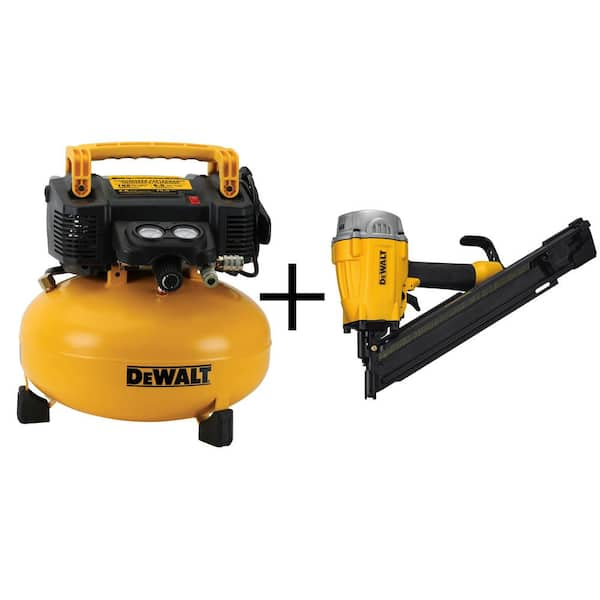
DEWALT is known for durable tools, and this compressor is no exception. It delivers 2.6 CFM at 90 PSI with a 6-gallon tank, suitable for all but the most demanding framing jobs. The 75.5 dB noise level is on the lower end for this class. Its high-flow regulator helps maintain steady pressure, reducing the risk of nail jams.
4. Makita Mac2400
If you need more power and don’t mind extra weight, the Makita MAC2400 is a top pick. It outputs an impressive 4.2 CFM at 90 PSI, enough for rapid nailing or two nailers at once. The cast-iron pump lasts longer than many rivals. However, at 77 lbs, it’s best suited for stationary work or rolling carts.
5. California Air Tools 8010
This model is famous for quiet operation, running at just 60 dB—barely louder than a conversation. The 8-gallon tank gives you a longer run time between cycles, and 3. 0 CFM at 90 PSI handles most framing nailers with ease.
At 48 lbs, it’s manageable for most users. If you work indoors or in noise-sensitive areas, this is a smart choice.
6. Rolair Jc10 Plus
The Rolair JC10 Plus is highly respected among carpenters for its quality build and ultra-quiet 60 dB operation. Although the tank is smaller (2.5 gallons), it delivers 2.35 CFM at 90 PSI—enough for single-tool use and great for trim or finish work, too. The oil-free design reduces upkeep, making it ideal for users who want reliability without fuss.
7. Metabo Hpt Ec710s
Previously Hitachi, Metabo HPT’s EC710S offers a 6-gallon tank and 1.3 CFM at 90 PSI. While the CFM is lower than most competitors, it’s often bundled with nailers for value. Best for light framing or intermittent use. It’s one of the quieter pancake models at 73 dB.
8. Senco Pc1010
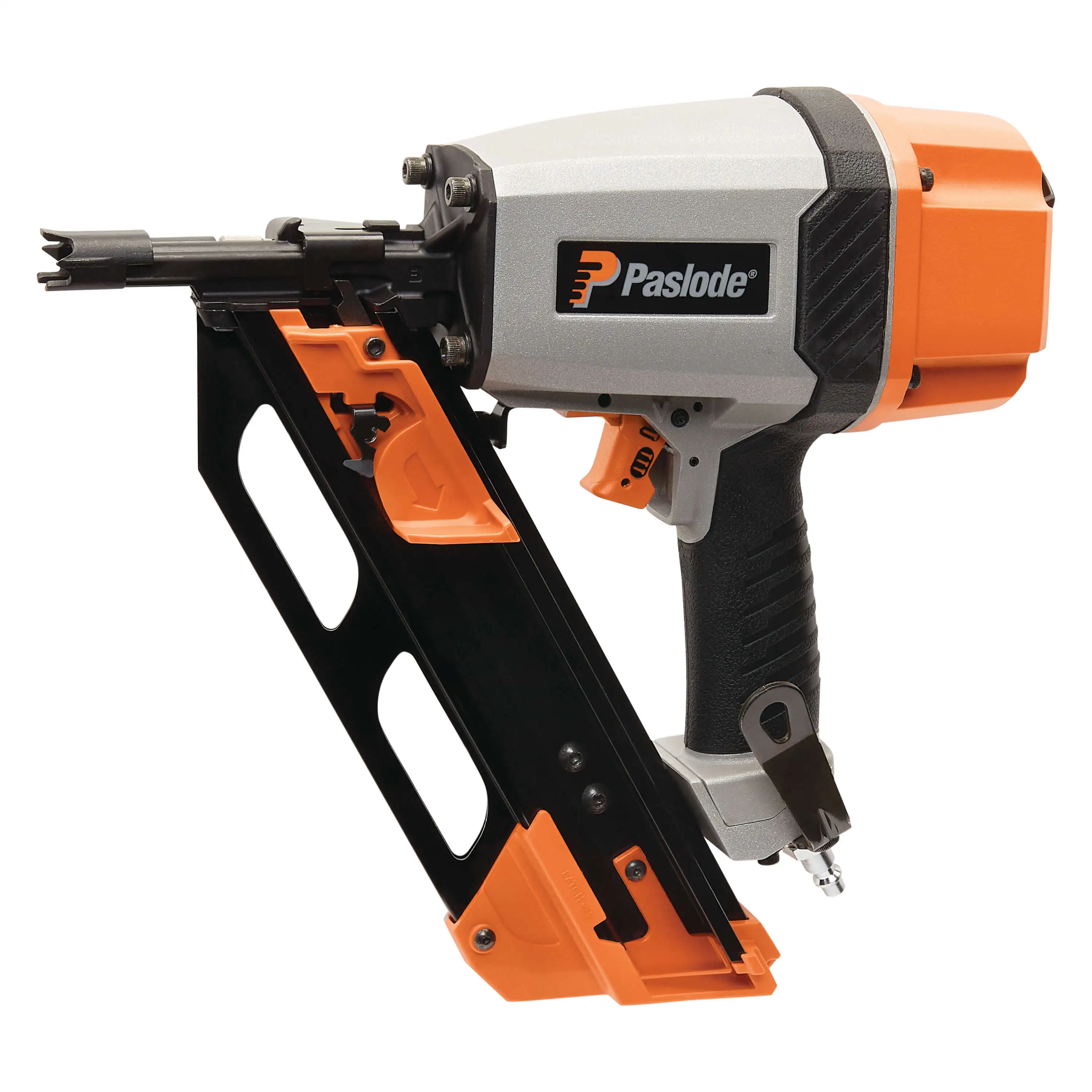
This tiny compressor is not for heavy framing, but it’s worth a mention for its portability. At just 20 lbs and 1-gallon capacity, the Senco PC1010 is best for small punch-list jobs or quick fixes. It only delivers 0.7 CFM at 90 PSI, so it will not keep up with fast-paced framing, but it’s perfect if you need something light and quick for occasional use.
Credit: www.paslode.com
What Really Matters: Practical Buying Advice
When choosing an air compressor for your framing nailer, keep these tips in mind:
- Match CFM to your nailer’s needs. If you plan to shoot nails quickly, aim for at least 2.5 CFM at 90 PSI. For two nailers at once, target 4+ CFM.
- Tank size and recovery time matter. A bigger tank means less waiting, but also more weight. If your work is stop-and-go (not continuous), a medium tank (4–6 gallons) is usually best.
- Consider portability. If you work alone and move often, stick to models under 40 lbs.
- Noise matters indoors. If working in homes or finished spaces, try to stay under 75 dB.
- Oil-free vs. oil-lubed. Oil-free compressors are easier for beginners, but oil-lubed models last longer with proper care.
- Check the warranty. Look for at least a 1-year warranty; 3–5 years is even better.
A mistake beginners make: focusing only on PSI or tank size without checking CFM. Even a huge tank won’t help if the compressor can’t deliver enough air per minute. Another common error: ignoring noise, which can quickly become a problem in quiet neighborhoods or indoor work.
Head-to-head: 3 Scenarios And Best Choices
Not every job is the same. Here’s how to pick the right compressor for your main type of framing work.
1. For Diyers And Homeowners
If you’re building a deck, framing a basement, or doing home repairs, portability and price are important. Pancake compressors like PORTER-CABLE C2002 or BOSTITCH BTFP02012 are perfect: affordable, light, and enough power for single-tool use.
2. For Professionals And Heavy Use
If you’re framing houses or work as part of a crew, you need higher air delivery and reliability. The Makita MAC2400 or California Air Tools 8010 offer more CFM and larger tanks. They handle multiple tools and longer work sessions with fewer stops.
3. For Indoor Or Noise-sensitive Environments
If you work inside finished homes, schools, or offices, noise is a top concern. Models like California Air Tools 8010 or Rolair JC10 Plus run at just 60 dB, far quieter than most compressors. These let you work without disturbing clients or neighbors.
Real-world Example: Framing A Basement
Let’s say you’re framing a 1,000-square-foot basement. You’ll be driving hundreds of nails into 2x4s. If you use a compressor with only 1. 3 CFM (like the Metabo HPT EC710S), you’ll have to stop often and wait for the tank to refill.
With a compressor like the Makita MAC2400 (4. 2 CFM), you can work nearly non-stop. Over a full day, this could save you hours.
Another non-obvious tip: If working with a helper, consider a compressor with at least 4 CFM and a larger tank (8+ gallons) to avoid constant pauses. Also, always check your framing nailer’s specific CFM and PSI requirements in the manual before buying.
Maintenance And Longevity: What To Expect
Even the best compressor can fail early if not cared for. Here’s what to keep in mind:
- Drain the tank after each use to prevent rust.
- Check and clean filters every few weeks.
- For oil-lubed models, change oil as recommended.
- Store in a dry place, away from dust and moisture.
- Use only the correct extension cords (short and heavy gauge) to avoid power drops.
Most compressors in this guide require little upkeep, especially the oil-free models. However, if you plan to use your compressor daily, investing in an oil-lubed model like the Makita MAC2400 can save money in the long run.
Credit: www.homedepot.com
Side-by-side Recap: Which Compressor For Which User?
Here’s a summary to help you quickly match a model to your needs:
| User Type | Best Model(s) | Why? |
|---|---|---|
| DIY/Homeowner | PORTER-CABLE C2002, BOSTITCH BTFP02012 | Portable, affordable, enough for single-tool use |
| Professional/Heavy Use | Makita MAC2400, California Air Tools 8010 | High CFM, large tank, reliable under heavy load |
| Indoor/Quiet Jobs | California Air Tools 8010, Rolair JC10 Plus | Very low noise, good for finished spaces |
| Light/Trim Work | Senco PC1010 | Ultra-light, easy for small repairs |
How To Avoid Common Mistakes
Many buyers regret their purchase because of simple errors. Here are the most common mistakes and how to avoid them:
- Buying by tank size only: Always check CFM at 90 PSI first.
- Ignoring noise level: Check dB ratings, especially for indoor work.
- Underestimating weight: Even a 10 lb difference can matter if you move the compressor a lot.
- Not matching power source: Make sure your job site has the right outlets or choose gas-powered if needed.
- Skipping warranty details: A long warranty often means a better-built compressor.

Credit: www.youtube.com
Accessories That Improve Your Experience
To get the best from your compressor and framing nailer, consider these extras:
- High-quality air hose: A flexible, kink-resistant hose makes work smoother.
- Quick-connect fittings: Save time when switching tools.
- Inline air filter: Reduces moisture and debris, protecting your nailer.
- Regulator and gauge: Fine-tunes pressure for different nailers.
- Carrying case or cart: Makes transport easier for heavier models.
Final Thoughts: Making The Right Choice
Choosing the best air compressor for your framing nailer isn’t just about picking the biggest or cheapest model. It’s about matching the right features—CFM, tank size, noise, and weight—to your actual work. For most homeowners, a 6-gallon pancake compressor is perfect.
Professionals may want the extra power and durability of a Makita or California Air Tools model. Always consider your main use case, and don’t overlook noise or maintenance. With the right compressor, your framing projects will be faster, smoother, and more enjoyable.
For more details on air compressor technology and safety, check out this resource from Wikipedia.
Frequently Asked Questions
What Size Air Compressor Do I Need For A Framing Nailer?
Most framing nailers need at least 2–4 CFM at 90 PSI. For single-tool use, a 4–6 gallon tank is usually enough. For heavy or multiple-tool use, look for 8+ gallons and 4+ CFM.
Can I Use A Small Pancake Compressor For Framing?
Yes, for most DIY and light professional jobs, a 6-gallon pancake compressor with 2.5+ CFM is enough. For large or rapid jobs, a bigger compressor is better.
Is An Oil-free Or Oil-lubed Compressor Better For Framing Nailers?
Oil-free compressors need less maintenance and are good for light to medium use. Oil-lubed compressors last longer and handle heavy, regular work better, but need oil changes.
How Important Is Noise Level In An Air Compressor?
If you work indoors or around people, a quiet compressor (below 75 dB) makes a big difference. For outdoor work, noise is less of an issue.
Can One Air Compressor Run Multiple Framing Nailers?
Yes, if the compressor has enough CFM and tank size. For two nailers, look for at least 4 CFM at 90 PSI and a tank of 8 gallons or more. Always check your compressor’s ratings before connecting multiple tools.