

A good air compressor provides reliable power for various tasks. It enhances efficiency in both professional and DIY projects.
Choosing the right air compressor is crucial for achieving optimal performance. These versatile tools serve multiple purposes, from inflating tires to powering pneumatic tools. Selecting a high-quality model ensures durability and efficiency, saving you time and money in the long run.
Consider factors like tank size, pressure output, and portability to find the best fit for your needs. Whether you’re a hobbyist or a professional, understanding air compressor specifications can significantly impact your work. A good air compressor not only improves productivity but also enhances the quality of your projects. Investing in the right equipment pays off, making your tasks easier and more efficient.
Introduction To Air Compressors
Air compressors are essential tools in many industries. They convert power into potential energy stored in compressed air. This energy is used for various applications, from powering tools to inflating tires. Understanding air compressors helps you choose the right one for your needs.
The Role Of Air Compressors In Modern Industry
Air compressors play a vital role in different sectors. They are used in manufacturing, construction, and automotive industries. Here are some key functions:
- Power pneumatic tools
- Inflate tires and sports equipment
- Paint spraying
- Operate machinery
- Provide air for HVAC systems
Without air compressors, many tasks would be time-consuming and difficult. They enhance productivity and efficiency across various applications.
Types Of Air Compressors: A Brief Run-down
There are several types of air compressors. Each type serves different needs. Here’s a quick overview:
| Type | Description | Common Uses |
|---|---|---|
| Reciprocating Compressors | Use pistons to compress air. | Construction, automotive repair |
| Rotary Screw Compressors | Use rotating screws to compress air. | Manufacturing, HVAC systems |
| Scroll Compressors | Use two spirals to compress air. | Refrigeration, air conditioning |
| Centrifugal Compressors | Use high-speed impellers to compress air. | Power plants, large industrial applications |
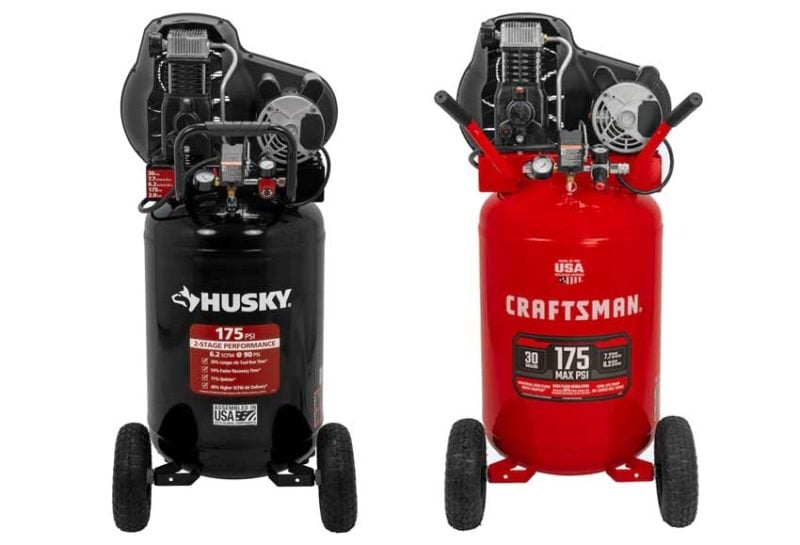
Choosing the right type depends on your specific needs. Consider factors like power, efficiency, and application.
Credit: www.protoolreviews.com
Key Features To Look For
Choosing a good air compressor is essential. Knowing the right features makes your decision easier. Focus on these key aspects to find the best fit for your needs.
Pressure And Cfm Ratings
Pressure and CFM (Cubic Feet per Minute) ratings are crucial. They tell you how powerful the compressor is. Higher pressure means stronger performance.
- Pressure: Measured in PSI (Pounds per Square Inch).
- CFM: Indicates airflow rate. Higher CFM means quicker work.
Choose a compressor with the right PSI and CFM for your tasks. For example:
| Application | Recommended PSI | Recommended CFM |
|---|---|---|
| Inflating Tires | 30-40 PSI | 2-4 CFM |
| Painting | 60-80 PSI | 6-12 CFM |
| Powering Tools | 90-120 PSI | 4-10 CFM |
Tank Size: Matching Your Needs
Tank size affects how long you can use the compressor. Larger tanks hold more air and require less frequent refilling.
- Small tanks: Good for light tasks. Usually 1-6 gallons.
- Medium tanks: Suitable for home projects. Typically 6-20 gallons.
- Large tanks: Ideal for heavy-duty work. Often over 20 gallons.
Consider how often you will use the compressor. Choose a tank size that matches your workload.
Oil-free Vs. Oiled: Weighing The Benefits
Choosing between oil-free and oiled compressors matters. Each type has its benefits.
- Oil-Free:
- No maintenance needed.
- Lightweight and portable.
- Good for indoor use.
- Oiled:
- Quieter operation.
- Longer lifespan.
- Better for heavy tasks.
Pick the type that fits your needs best. Consider maintenance and usage frequency.
Size And Portability Considerations
Choosing the right air compressor involves understanding size and portability. These factors impact performance and convenience. A good air compressor should fit your workspace and mobility needs.
Stationary Vs. Portable Models
Air compressors come in two main types: stationary and portable. Here’s how they differ:
| Feature | Stationary Models | Portable Models |
|---|---|---|
| Size | Large, fixed installation | Compact, easy to move |
| Power | Higher power output | Lower power output |
| Use | Workshop or garage | Job sites or home use |
| Cost | Generally more expensive | Usually budget-friendly |
Stationary models work best for heavy tasks. They provide continuous power and are ideal for workshops. Portable models are great for DIY projects. They allow easy transport to different locations.
Evaluating Workspace And Mobility Needs
Consider your workspace and how often you move the compressor. Ask these questions:
- Is there enough space for a stationary model?
- Will I need to transport it often?
- What tasks will I use it for?
For tight spaces, a portable model is ideal. If you perform tasks in one location, a stationary model may suit you better. Think about the following:
- Weight of the compressor
- Handle or wheels for transport
- Storage space when not in use
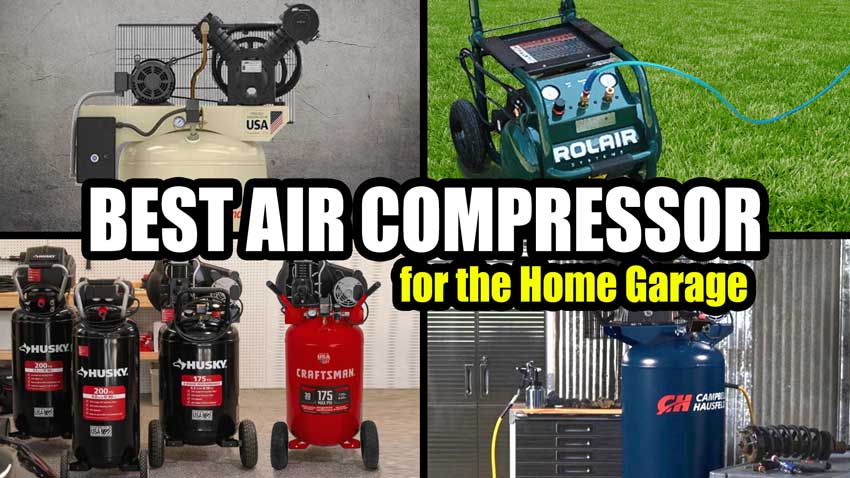
Choosing the right size and portability ensures you select the best air compressor for your needs. Make informed decisions to enhance your projects.
Credit: www.protoolreviews.com
Power Source Options
Choosing the right power source for your air compressor is crucial. It affects performance, efficiency, and usability. Here are the main options: electric-powered and gasoline-powered compressors.
Electric-powered Compressors
Electric-powered compressors are popular for home and small shop use. They offer several advantages:
- Quiet Operation: They run quietly compared to gasoline units.
- Low Maintenance: Fewer moving parts mean less upkeep.
- Energy Efficient: They consume less energy.
- Indoor Use: Safe to use indoors without fumes.
However, they do have some limitations:
- Power Supply: Require a nearby electrical outlet.
- Limited Portability: Less mobile due to cord restrictions.
Gasoline-powered Units: Pros And Cons
Gasoline-powered compressors are ideal for outdoor work. Here are their benefits:
- High Power Output: They can handle heavy-duty tasks.
- Portable: No need for electrical outlets.
- Versatile: Great for remote locations.
Despite these advantages, consider the drawbacks:
- Noise: They are much louder than electric models.
- Maintenance: Require regular maintenance and fuel checks.
- Emissions: Produce harmful fumes.
| Feature | Electric-Powered | Gasoline-Powered |
|---|---|---|
| Noise Level | Quiet | Loud |
| Maintenance | Low | High |
| Portability | Limited | High |
| Efficiency | High | Moderate |
Understanding Duty Cycle
The duty cycle is a crucial factor in air compressor performance. It refers to the percentage of time a compressor can run without overheating. Knowing the duty cycle helps you choose the right compressor for your needs.
Defining Duty Cycle
The duty cycle is expressed as a percentage. It indicates how long a compressor can operate within a specific time frame. For example, a 50% duty cycle means:
- The compressor runs for 5 minutes.
- It rests for 5 minutes.
This cycle ensures the compressor does not overheat. Understanding this helps in maintaining optimal performance.
Importance Of Duty Cycle In Compressor Performance
The duty cycle directly affects the efficiency and longevity of an air compressor. Here are some key points:
- A high duty cycle allows for continuous operation.
- A low duty cycle requires more frequent breaks.
Consider these factors:
| Duty Cycle (%) | Operating Time (minutes) | Rest Time (minutes) |
|---|---|---|
| 25% | 2.5 | 7.5 |
| 50% | 5 | 5 |
| 75% | 7.5 | 2.5 |
A higher duty cycle is beneficial for heavy tasks. It minimizes downtime and enhances productivity. Choose a compressor with a suitable duty cycle for your specific applications.
Noise Levels And Solutions
Air compressors can be quite noisy. Understanding their noise levels helps in choosing the right one. Finding solutions to reduce noise enhances comfort.
Decibel Ratings Explained
Noise is measured in decibels (dB). Here’s a quick overview of common sounds:
| Sound Source | Decibel Level (dB) |
|---|---|
| Whisper | 30 dB |
| Normal Conversation | 60 dB |
| Air Compressor | 70-90 dB |
| Rock Concert | 110 dB |
Higher dB levels mean louder sounds. A quiet compressor is often below 70 dB. This level is more comfortable for daily use.
Methods To Reduce Compressor Noise
Many methods can help lower compressor noise:
- Soundproofing Enclosure: Build a soundproof box around the compressor.
- Vibration Pads: Use rubber pads under the compressor. They absorb vibrations.
- Location: Place the compressor away from work areas.
- Sound Barriers: Install walls or barriers to block sound.
- Regular Maintenance: Keep the compressor in good shape. A well-maintained unit runs quieter.
Implementing these methods can greatly reduce noise levels. Enjoy a quieter workspace with the right solutions.
Maintenance Tips For Longevity
Proper maintenance is key for a long-lasting air compressor. Regular care ensures optimal performance and prevents costly repairs. Here are essential tips to keep your compressor running smoothly.
Routine Checks And Upkeep
Regular checks can help spot problems early. Follow these steps for effective upkeep:
- Inspect the Oil Level: Check oil levels weekly. Change oil every 500 hours of use.
- Clean the Air Filter: Clean or replace filters every month. This improves airflow.
- Drain the Tank: Empty the tank daily to prevent rust. Water buildup can damage the unit.
- Check Hoses and Connections: Inspect for leaks or wear. Replace damaged parts immediately.
Troubleshooting Common Issues
Identifying issues early can save time and money. Here are common problems and solutions:
| Issue | Possible Cause | Solution |
|---|---|---|
| Compressor Won’t Start | Power Supply Issue | Check the power source and reset the circuit breaker. |
| No Air Pressure | Leak in Hose | Inspect hoses for damage and replace if needed. |
| Excessive Noise | Loose Parts | Tighten all screws and bolts. Inspect for worn parts. |
| Air Is Not Consistent | Dirty Filter | Clean or replace the air filter. |
Follow these maintenance tips. Keep your air compressor in top shape for years to come.
Accessorizing Your Air Compressor
Accessorizing your air compressor enhances its functionality and efficiency. The right tools make tasks easier. Proper attachments improve performance and safety. Let’s explore essential attachments and safety equipment.
Essential Attachments For Efficiency
Using the right attachments can boost your air compressor’s performance. Here are some essential attachments to consider:
- Air Hoses: Choose durable, flexible hoses. They help with mobility.
- Regulators: These control the air pressure. They ensure optimal performance.
- Quick Connect Couplers: Easy to attach and detach tools. They save time.
- Filters: Air filters remove dirt and moisture. Clean air prolongs tool life.
- Blow Guns: Perfect for cleaning surfaces. They provide quick air blasts.
| Attachment | Function |
|---|---|
| Air Hoses | Connects tools to the compressor. |
| Regulators | Controls air pressure levels. |
| Quick Connect Couplers | Facilitates easy tool changes. |
| Filters | Ensures clean air supply. |
| Blow Guns | Removes debris from surfaces. |
Safety Equipment For Compressor Use
Safety is crucial when using an air compressor. Proper equipment protects you and others. Here are key safety items:
- Safety Goggles: Protect your eyes from flying debris.
- Ear Protection: Reduce noise exposure. Prevent hearing damage.
- Gloves: Wear sturdy gloves for hand protection.
- Respirators: Use when working with harmful materials.
- Fire Extinguisher: Keep it nearby for emergencies.
Investing in these safety items ensures a secure workspace. Always prioritize safety while working with your air compressor.
Top Picks And Recommendations
Finding the right air compressor is crucial. A good compressor makes tasks easier and faster. Here are the best options for home and industrial use.
Best Compressors For Home Use
Homeowners need reliable and efficient air compressors. Here are top choices:
- Porter-Cable C2002
- 6-gallon pancake tank
- Easy to transport
- Ideal for small projects
- Bostitch BTFP02012
- 6-gallon tank
- Quiet operation
- Great for nail guns
- California Air Tools 6010L
- Low noise level
- Lightweight and portable
- Perfect for DIY tasks
| Model | Tank Size | Noise Level | Weight |
|---|---|---|---|
| Porter-Cable C2002 | 6 gallons | 82 dB | 30 lbs |
| Bostitch BTFP02012 | 6 gallons | 78 dB | 29 lbs |
| California Air Tools 6010L | 6 gallons | 60 dB | 29 lbs |
Industrial Grade Compressors: Top Contenders
Industrial jobs need powerful air compressors. These models stand out:
- Ingersoll Rand SS3J5.5GH-WB
- Powered by gas
- 5.5 HP engine
- High-performance design
- Chicago Pneumatic QRS 30
- 30 HP motor
- Durable construction
- Energy-efficient
- Atlas Copco GA 37
- Robust and reliable
- 37 HP output
- Advanced technology
| Model | Power | Type | Max PSI |
|---|---|---|---|
| Ingersoll Rand SS3J5.5GH-WB | 5.5 HP | Gas | 135 PSI |
| Chicago Pneumatic QRS 30 | 30 HP | Electric | 125 PSI |
| Atlas Copco GA 37 | 37 HP | Electric | 150 PSI |
Cost Analysis And Budgeting
Understanding the cost of a good air compressor is crucial. It involves more than just the purchase price. You need to consider both initial investment and ongoing operational costs.
Initial Investment Vs. Operational Costs
The initial price of an air compressor varies widely. Factors include size, brand, and features. Some compressors cost less, but they may incur higher operational costs.
| Type of Compressor | Initial Cost | Average Operational Cost (Annual) |
|---|---|---|
| Portable | $200 – $500 | $50 – $100 |
| Stationary | $500 – $3,000 | $100 – $300 |
| Industrial | $3,000+ | $500+ |
Portable compressors have lower initial costs. However, stationary models may offer better long-term savings. Choose wisely based on your needs.
Finding Value: Balancing Price And Quality
Finding value in an air compressor requires balance. Don’t just focus on the price. Quality and durability matter too.
- Research Brands: Look for trusted brands.
- Read Reviews: Customer feedback helps gauge quality.
- Consider Warranty: A good warranty indicates reliability.
- Assess Features: Determine if features justify the cost.
Set a budget that includes both purchase and maintenance costs. Investing in a quality compressor saves money over time.
Final Thoughts
Choosing the right air compressor is crucial for various tasks. It can enhance your work efficiency and save time. Understanding the key features helps in making a smart purchase. Here are some key takeaways and future trends to consider.
Key Takeaways For Buyers
- Power Source: Decide between electric or gas models.
- Tank Size: Larger tanks provide longer run times.
- Portability: Choose a lightweight model for easy transport.
- Noise Level: Look for quieter options if noise is a concern.
- Maintenance: Select models with low maintenance requirements.
Future Trends In Air Compressor Technology
| Trend | Description |
|---|---|
| Smart Technology | Integration of IoT for better control and monitoring. |
| Energy Efficiency | Focus on reducing power consumption and waste. |
| Compact Designs | Smaller units without compromising performance. |
| Eco-Friendly Options | Use of sustainable materials and processes. |
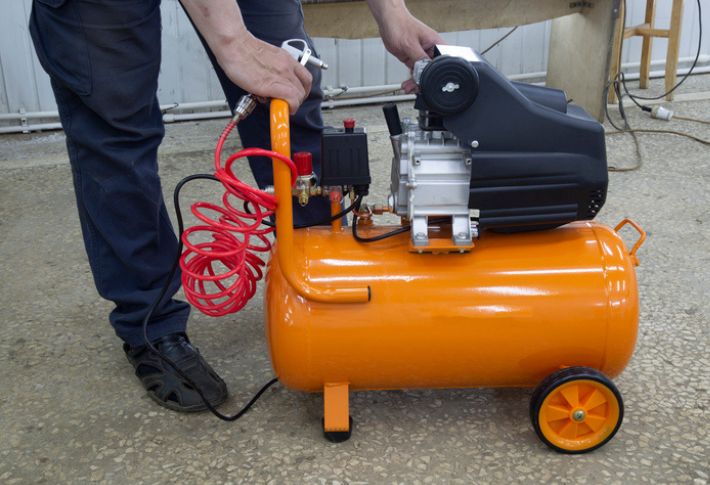
Stay informed about these trends. They will shape the future of air compressors. Make an informed decision based on your needs. A good air compressor can make a big difference in your projects.
Credit: www.woodsmith.com
Frequently Asked Questions
What Should I Look For In An Air Compressor?
When choosing an air compressor, consider its size, type, and power. Determine the intended use, such as inflating tires or powering tools. Check the tank capacity and pressure output. Finally, review the brand reputation and warranty options to ensure reliability and support.
How Do I Maintain My Air Compressor?
Regular maintenance of your air compressor includes checking the oil level, cleaning or replacing air filters, and draining moisture from the tank. Inspect hoses and connections for wear or leaks. Additionally, schedule periodic professional servicing to prolong its lifespan and maintain optimal performance.
What Is The Best Type Of Air Compressor?
The best type of air compressor depends on your needs. For home use, portable or pancake compressors are ideal. For heavy-duty applications, consider a rotary screw or reciprocating compressor. Always evaluate the required pressure and volume to choose the most suitable model for your tasks.
Can I Use An Air Compressor For Painting?
Yes, air compressors are excellent for painting. They provide a consistent spray and help achieve a smooth finish. Choose a compressor with a suitable CFM rating for your spray gun. Additionally, ensure you use the right nozzle size and pressure settings for optimal results.
Conclusion
Choosing the right air compressor can enhance your projects significantly. Evaluate your needs carefully before making a decision. Consider factors like power, size, and portability. Investing in a quality compressor will pay off in efficiency and performance. Make an informed choice for optimal results in your tasks.
Happy compressing!